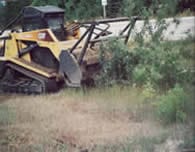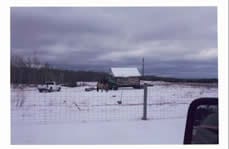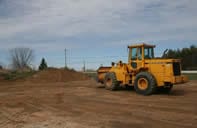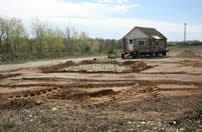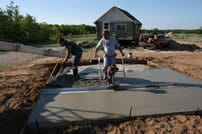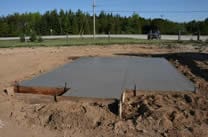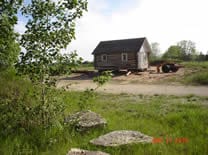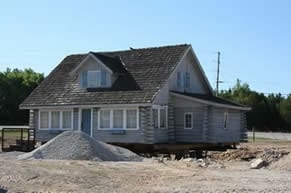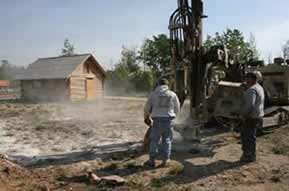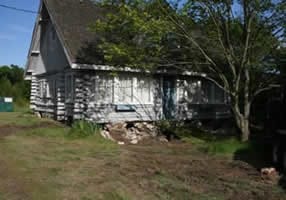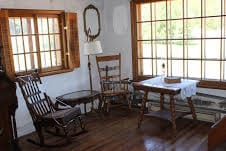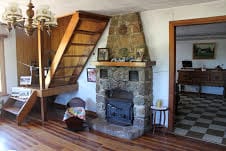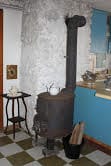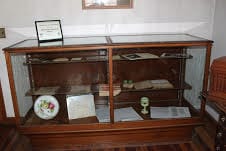
In October of 2008 the Jacksonport Historical Society became the owners of 4.3 acres of land on the south edge of Jacksonport on Highway 57. This property was originally owned by Joseph and Margaret Smith in 1872. The Smiths built a large home which was a gathering place for friends and community members to visit and celebrate holidays and enjoy “Aunt Maggie’s” delicious meals. Now it is time to make this area a new gathering place for the community — the start of the long-awaited museum complex the Society has been working toward for many years.
The Board of Directors is always looking for people who are willing to contribute their knowledge and talents to this endeavor. There are volunteer opportunities for one and all.
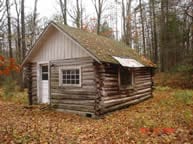
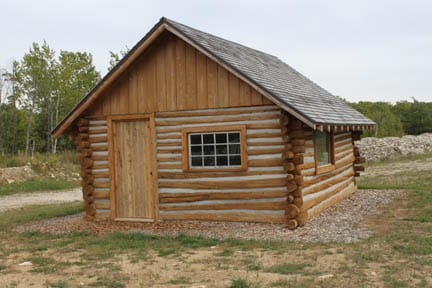
Cote Cabin — the first building moved to the museum property
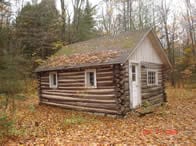
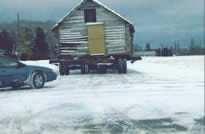
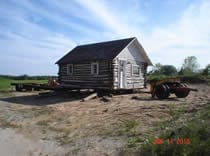
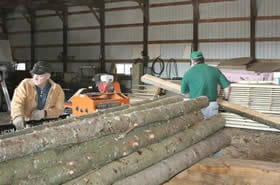
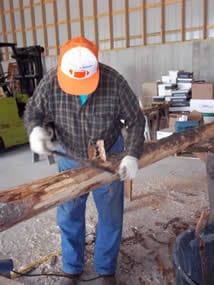
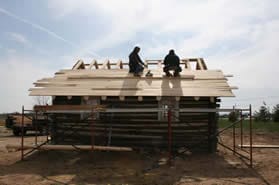
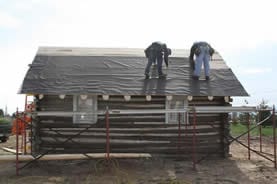
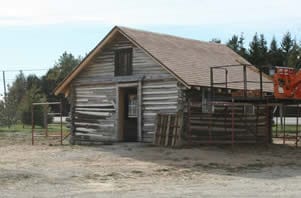
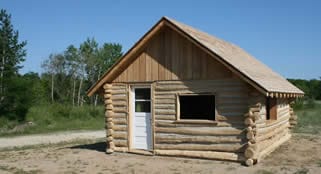
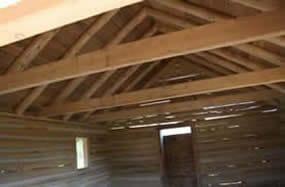
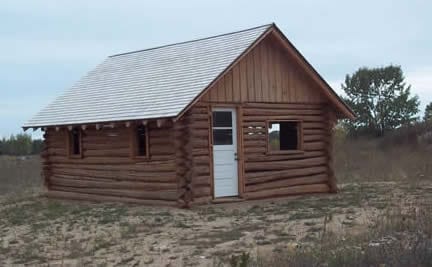
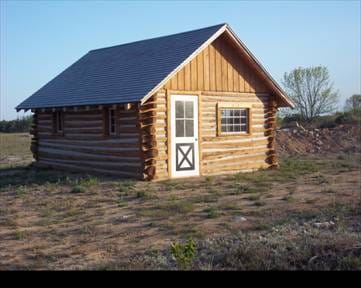
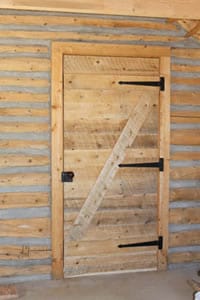
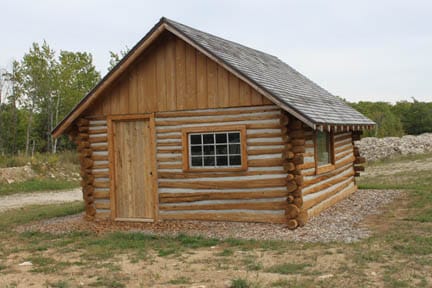
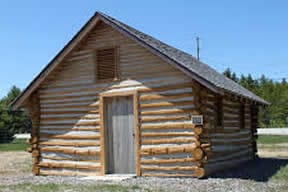
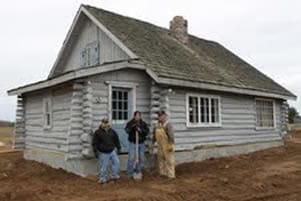
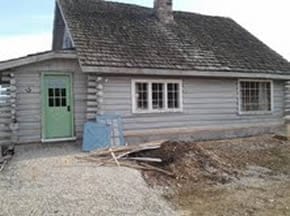
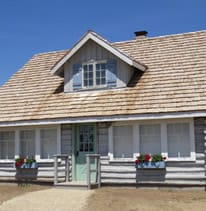
A log cabin donated by Kevin and Debbie Magno, son and daughter-in-law of Marlene (Cote) and Napoleon Magno, was the first building moved to the property, in 2010. The land on which this cabin sat, on the west side of County A just north of County V, was originally owned by Charles and Mary Reynolds in 1885. In 1933 the Episcopal Diocese of Fond du Lac purchased 60 acres from the Reynolds so the minister could earn some of his income by farming and also to build their church, vicarage, and guild hall. In 1935 Joe and Lena Urban purchased the piece of land where the log cabin was located. When the vicarage and guild hall burned in 1936 there is reference to “Father Hood now being comfortably housed in the Urban cottage nearby.” Historically this is the first reference we have to this cabin. In 1943 the Urbans sold this property to Joe and Lou Cote and then in 1989 Kevin, Joe and Lou’s grandson, purchased the property from them.
The plaque on the cabin reads:
This log cabin once stood on the Jacksonport farm of Joseph and LaValla Cote, located at the western corner of County Roads A and V, and it is in their memory the cabin was donated to the Jacksonport Historical Society, Inc. and moved to this location in 2010. Originally a logger’s cabin built in the 1880s, it provided shelter to those clearing land in the area.
The Loritz House
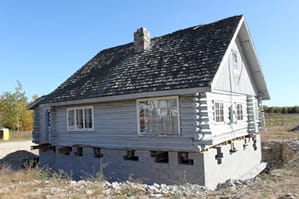
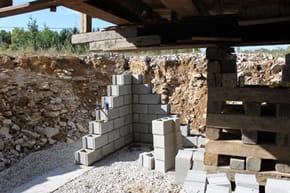
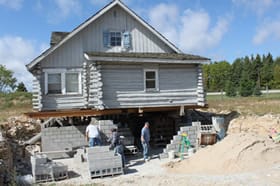
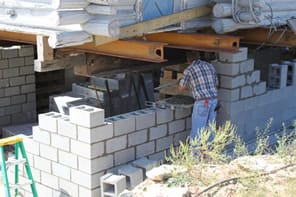
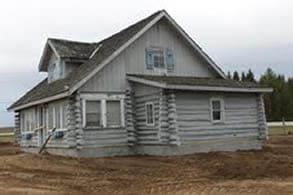
Jim and Mary Lou Stanke have donated their log home on Loritz Road to the Jacksonport Historical Society. This home stands on the farm once owned by Joseph and Martha Loritz. They had milk cows and farmed the land along with 20 acres of cherries, 10–15 acres of apples and a five-acre patch of strawberries. During the Depression the Loritz family had a $6,500 loan to pay off. Even though picking strawberries was a back-breaking job, the family picked and shipped the strawberries to Chicago, packed on top of the iced boxes of fish. They paid the loan off in four years with the strawberries! Joseph and his sons Harry and George also cut logs from their woods with a two-man cross-cut saw. It is from these logs that in 1925 they built this log home. The Loritz home still stands today on a strong foundation. Indeed we are grateful to the Stankes for donating this home to us.
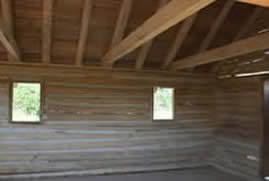
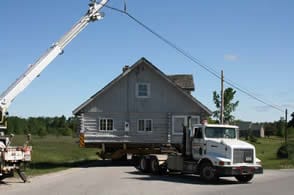
The Loritz house was moved to the museum property in June 2012 and opened to the public for the first time on May 23–24, 2015, and again on August 2, 2015, along with the Cote Cabin.
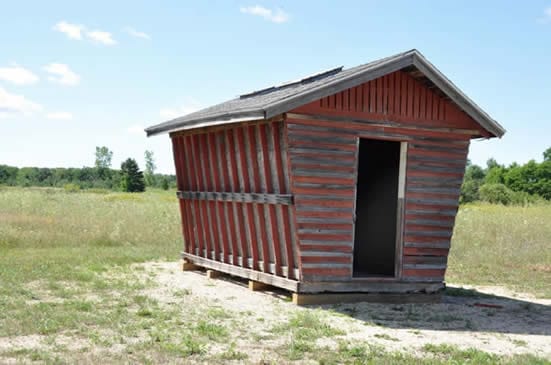
Do you know what this is?
While driving through the countryside you occasionally see an unusual outstanding building — and there is one at the Jacksonport Historical site! This unusual building is a corn crib. Corn cribs were originally built on the farm to store and dry whole corn, still on the cob, with (or without) the husk. Dave Peterson donated this building to the Jacksonport Historical Society and it was moved to its current location on July 1, 2016.
The wooden corn cribs were usually about 15 feet long by 4 feet wide at the bottom and about 11 feet tall. Slatted walls on all four sides were a must and all were elevated off the ground to keep critters from getting into the corn and destroying it. The slatted walls allowed for good air circulation around the entire crib, which is essential for drying out corn. Most cribs had two small access doors at the very top which allowed the farmer to drop in corn from the day’s harvest without having to open the front door. Most farm families painted their cribs to match the workshop next door, the barn, or even their home.
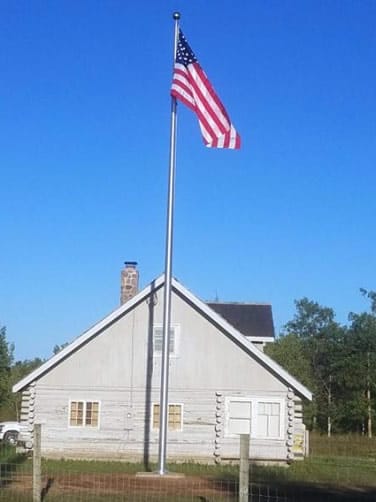
Patriotic pride
Thanks to Dick Birnschein, the museum property now has a new flag pole to display the nation’s colors.
Eureka House and the Erskine Root Cellar
In early Jacksonport history, the Eureka House was a place for travelers to rest their horses, get something to eat and drink, and stay overnight. It was in the center of town, located across from the present-day Lakeside Park at the corner of Highway 57 and County Road V.
Royal Erskine bought the Eureka House, which was two buildings joined together, from Charles Reynolds in 1875. He ran it as a saloon, boarding house, and dance hall. Lincoln (and Carrie) Erskine bought it from his brother in 1883, discontinued the saloon, and ran the Eureka House as a boarding house for the growing number of travelers going north on muddy, rutted trails by horse and buggy from Sturgeon Bay. The front part on the right became the Jacksonport Post Office in 1897. Lincoln was the Postmaster until his son Fred took over in 1915. Even after it became a post office, it continued as a boarding house for many years, as well as remaining the home for three generations of the Erskine family. The building had to be torn down in 1959 after the roof was set on fire by sparks flying across the street from the Carmody Grocery Store, which burned to the ground.
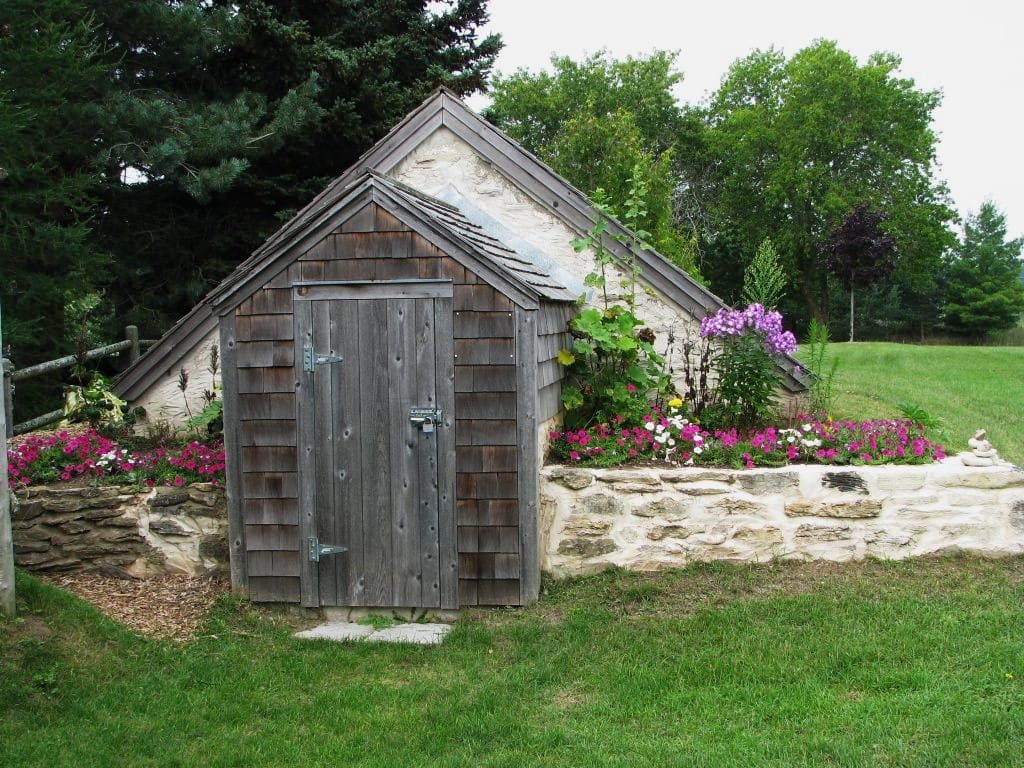
There was no basement under the Eureka House, so to preserve food for the family and guests, a root cellar was built. It had a shingled roof insulated with newspapers, built onto a stone foundation sunk about three feet into the ground. Although primitive, it served the purpose. Exterior temperatures had to drop to 25–30 degrees below zero before any frost was seen inside the root cellar. Potatoes, carrots, beets, and cabbage were stored in bins in the back. Shelves in the front held canned berries, meats, and vegetables. There were thirty-gallon crocks filled with sauerkraut. Wide-top milk bowls were filled with fresh milk daily; the cream rose to the top, was skimmed off, and once a week butter was made using a wooden barrel churn turned by a crank. Lincoln and Carrie’s grandchildren remember helping make head cheese, blood sausage, and liver sausage, and smoking bacon, hams, and hocks — all stored in the root cellar. The granddaughters would slide down the roof in their dresses and bloomers. Twice down the roof and they were sliding on bare skin. Many the spanking for wearing holes in their bloomers!
The root cellar, used until the fire in 1959, still stands on the property, which is now called the Erskine Rest Area. The Erskine Root Cellar is only open to the public twice a year: for Maifest in the spring and Cherry Fest the first Saturday in August.
In 1949, artist Robert C. Onan created an oil painting of the historic Eureka House. Recently, his son made it possible for the Jacksonport Historical Society to once again sell notecards of that painting. In 1976 Katherine and Robert C. Onan donated the parcel of land to the town of Jacksonport to be maintained as a green area. It is through the efforts of the Jacksonport Historical Society that this root cellar was restored in 2004 and preserved for future generations.